
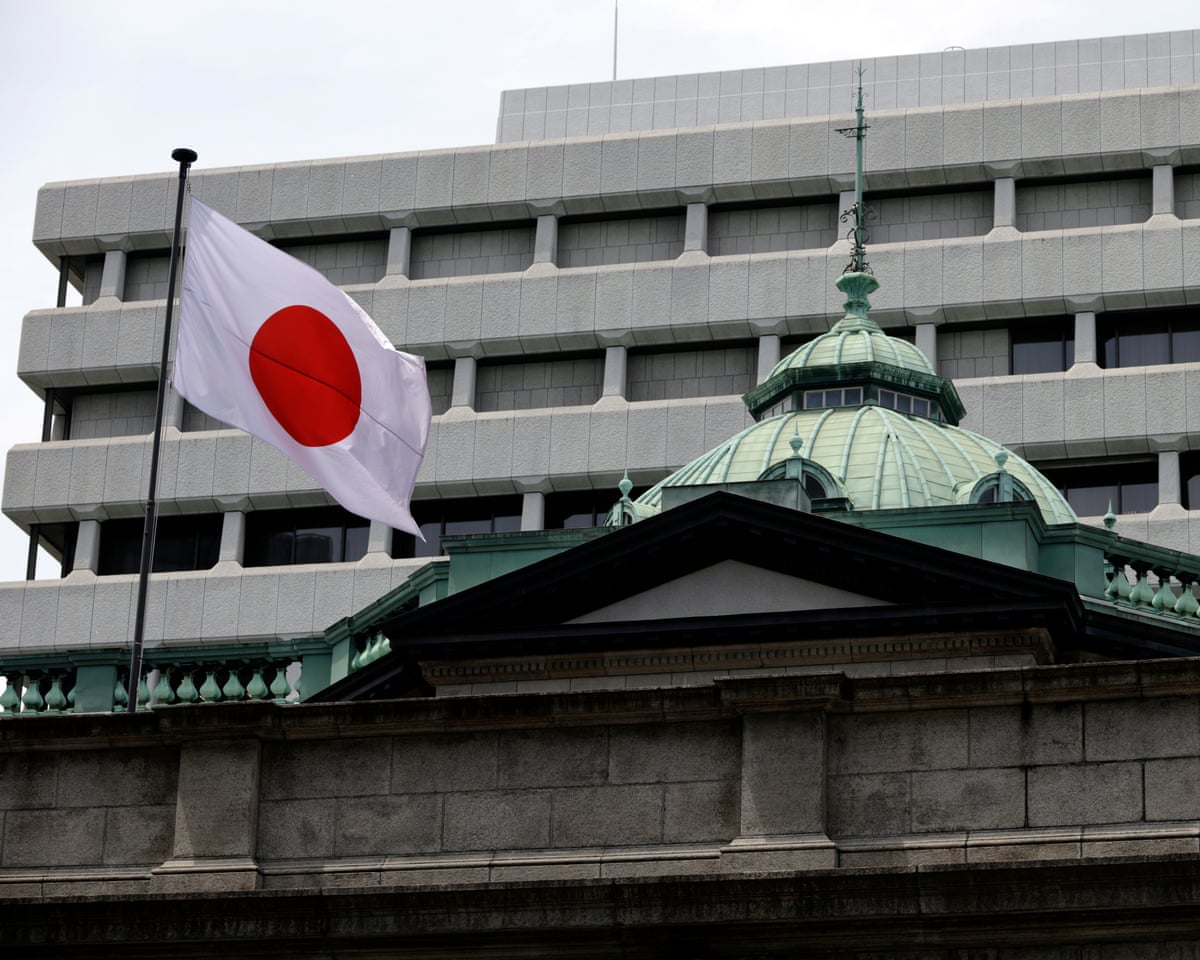
Japan has taken another major step away from the ultra-low interest rates that defined its economy for decades.
The Bank of Japan raised its policy rate by 25 basis points to 1.25% on September 18, taking borrowing costs to their highest level in 31 years. The decision came as policymakers increasingly focused on preventing inflation from remaining above the central bank's target.
But financial markets delivered an unexpected response.
Instead of strengthening after the rate increase, the Japanese yen weakened.
The reaction provides an important lesson about financial markets: currencies respond not only to what a central bank does today, but also to what investors believe it will do next.
Japan's Interest Rate Has Reached 1.25%
For many economies, an interest rate of 1.25% would still look extremely low.
For Japan, it represents a dramatic change.
The country spent years operating with interest rates around zero or below zero as the Bank of Japan attempted to overcome weak inflation and sluggish economic growth.
That era is gradually disappearing.
The latest increase brings the policy rate to 1.25%, the highest since the mid-1990s.
The decision was made by a 7-2 vote, with two policymakers favouring a more patient approach.
Inflation Has Changed Japan's Economic Problem
For decades, Japanese policymakers worried that prices were not rising enough.
Deflation and extremely low inflation can damage an economy because consumers may delay spending, businesses struggle to raise prices and wages, and economic activity can become stagnant.
The Bank of Japan therefore spent years attempting to generate sustainable inflation.
Now its challenge is changing.
Governor Kazuo Ueda said underlying inflation is approaching the central bank's 2% target, shifting policymakers' attention towards the possibility that inflation could rise too far.
Japan is moving from trying to create inflation towards trying to manage it.
Oil Is Making the Problem Harder
Japan imports a significant share of its energy requirements.
That means higher global oil prices can quickly affect domestic costs.
Oil has remained above $100 a barrel amid geopolitical disruption and concerns about energy supplies.
Higher energy prices can filter through an economy in several ways.
Transport becomes more expensive.
Manufacturing costs increase.
Electricity costs can rise.
Businesses may eventually pass some of those costs to consumers.
For a central bank attempting to keep inflation under control, a sustained energy shock makes policy considerably more complicated.
Why Did the Yen Fall After a Rate Hike?
Normally, higher interest rates can make a currency more attractive.
Investors may earn a higher return by holding assets denominated in that currency.
So why did the yen weaken?
The answer lies partly in expectations.
Markets had already anticipated the Bank of Japan's rate increase.
When an event is widely expected, traders often adjust their positions before the official announcement.
That means the actual decision may produce little positive surprise.
More importantly, investors were listening closely for indications of how aggressively the Bank of Japan would raise rates in the future.
Two Dissenting Policymakers Caught Investors' Attention
The 7-2 vote mattered.
Two policymakers argued for greater patience in raising borrowing costs.
That disagreement suggested the Bank of Japan may not be preparing for an uninterrupted series of rapid increases.
Governor Ueda also avoided committing to a specific timetable for additional hikes.
For currency traders expecting a more forceful message, that was significant.
The result was a strange-looking market reaction: Japan raised rates, but the yen still weakened.
The Interest-Rate Gap Remains Huge
Japan also needs to be viewed relative to other economies.
The United States Federal Reserve raised its benchmark rate this week to a range of 3.75% to 4.00% and indicated further tightening could follow.
Japan's rate is now 1.25%.
That still leaves a substantial difference between Japanese and American borrowing costs.
Investors deciding where to hold capital therefore continue to see significantly higher yields in the United States.
The Bank of Japan can raise rates while the yen remains under pressure if other major central banks are also tightening.
Japan Is Not Tightening Alone
This is becoming a global monetary-policy story.
Major central banks are once again confronting inflation pressures associated partly with expensive energy.
The Federal Reserve has raised rates.
The European Central Bank has also tightened policy.
The Bank of England held rates at its latest meeting but warned about inflation risks.
And the Bank of Japan has now taken rates to a three-decade high.
The important change is that central banks are increasingly worried about inflation at the same time.
The Global Economy Faces an Uncomfortable Combination
Central banks would prefer to raise interest rates when economies are growing rapidly.
Today's environment is more difficult.
Higher energy costs can increase inflation while simultaneously weakening economic growth.
Households spend more on fuel and energy, leaving less money available for other goods and services.
Businesses face higher transport and production expenses.
Meanwhile, higher interest rates make mortgages, corporate loans and government borrowing more expensive.
Economists worry about a combination of persistent inflation and slower economic growth, often associated with stagflation risks.
Higher Japanese Rates Affect More Than Japan
Japan has played an unusual role in global finance because borrowing costs remained extremely low for so long.
Investors could borrow cheaply in yen and invest that money in assets offering higher returns elsewhere.
This strategy is commonly known as the yen carry trade.
When Japanese interest rates rise, that calculation changes.
Borrowing yen becomes more expensive.
If the yen strengthens significantly, investors who borrowed the currency may also face larger repayment costs.
That means Bank of Japan policy can influence markets far beyond Tokyo.
What Is the Yen Carry Trade?
Imagine an investor can borrow money in Japan at a very low interest rate.
The investor converts those yen into another currency and purchases an asset offering a much higher return.
The difference between the cheap borrowing cost and the higher investment return creates potential profit.
For years, Japan's exceptionally low rates made the yen attractive as a funding currency.
But carry trades contain risk.
Currency movements can quickly eliminate the interest-rate advantage.
As Japanese rates rise, investors must reconsider whether the strategy remains worthwhile.
Japanese Businesses Face a New Cost of Capital
Higher rates also change conditions for companies inside Japan.
Borrowing becomes more expensive.
Businesses financing factories, equipment or acquisitions may face higher interest expenses.
Companies with significant debt may become more cautious about new investments.
At the same time, banks can potentially benefit from higher interest margins after years of operating in an extremely low-rate environment.
The effects therefore vary considerably across industries.
Households Will Feel the Change Too
Japanese consumers have spent much of their lives in a country where borrowing costs were exceptionally low.
A sustained period of higher rates changes that environment.
Variable-rate mortgages can become more expensive.
Consumer borrowing costs may rise.
Savings products, however, can begin offering better returns.
The shift therefore creates both winners and losers.
For younger Japanese households especially, a world of meaningfully positive interest rates may feel relatively unfamiliar.
Government Debt Makes the Transition Delicate
Japan has one of the world's largest public-debt burdens relative to the size of its economy.
That makes higher interest rates particularly important.
As government bonds mature and new debt is issued at higher yields, interest expenses can increase.
The adjustment does not happen instantly because existing bonds have different maturities.
But over time, sustained higher borrowing costs can place greater pressure on government finances.
This gives the Bank of Japan another reason to manage normalisation carefully.
A Weak Yen Has Advantages and Disadvantages
The yen's weakness is not entirely negative.
A cheaper currency can help Japanese exporters because revenue earned overseas becomes more valuable when converted back into yen.
It can also make Japan cheaper for international tourists.
But the disadvantages can be substantial.
Imported oil becomes more expensive.
Imported food and raw materials can cost more.
Households can therefore experience higher prices even if their incomes do not rise at the same pace.
That is one reason the yen has become such an important economic issue.
Global Investors Are Watching Japanese Bonds
Japan's enormous bond market means changes in domestic yields can influence investment decisions globally.
If Japanese government bonds begin offering more attractive returns, Japanese investors may have less incentive to send capital abroad.
That could affect demand for foreign bonds, including US Treasuries and European government debt.
Even relatively small changes in Japanese investment behaviour matter because Japanese financial institutions control enormous pools of capital.
Markets Are Already Dealing With Higher Bond Yields
The Bank of Japan decision comes during a difficult week for global fixed-income markets.
The benchmark US 10-year Treasury yield has moved above 5% for the first time since 2007, while higher energy costs have intensified concerns about inflation.
Global equities also came under pressure on Friday as investors absorbed the increasingly restrictive central-bank environment.
Higher bond yields create competition for stocks because investors can potentially receive more attractive returns from government debt.
They also increase borrowing costs throughout the economy.
Japan Cannot Ignore Global Inflation
Japan's inflation outlook is increasingly connected to developments beyond its borders.
Energy markets are global.
Commodity prices are global.
Supply chains cross continents.
Exchange rates influence import costs.
That means the Bank of Japan cannot manage inflation by looking only at domestic economic conditions.
A sharp increase in global oil prices can change Japan's inflation outlook even if domestic demand remains relatively moderate.
Further Rate Increases Remain Possible
Governor Ueda indicated that preventing an inflation overshoot has become an important policy consideration.
That leaves the door open to additional tightening.
But the pace remains uncertain.
Markets are currently pricing further increases in Japan alongside additional tightening elsewhere in the developed world.
Future decisions will depend on inflation, wages, economic growth, energy prices and the behaviour of the yen.
What Happens Next?
The next major question is not whether Japan has left the era of ultra-low rates.
That transition is already under way.
The question is how far the Bank of Japan is prepared to go.
If inflation remains persistent, policymakers may continue raising borrowing costs.
If economic growth weakens sharply, the central bank may need to move more cautiously.
And if the yen continues weakening despite higher rates, pressure for a stronger policy response could grow.
For investors, Japan has therefore become one of the most important monetary-policy stories in global markets.
The country that spent decades fighting to create inflation is now confronting a very different challenge:
how to control it without damaging the economy it spent years trying to revive.