
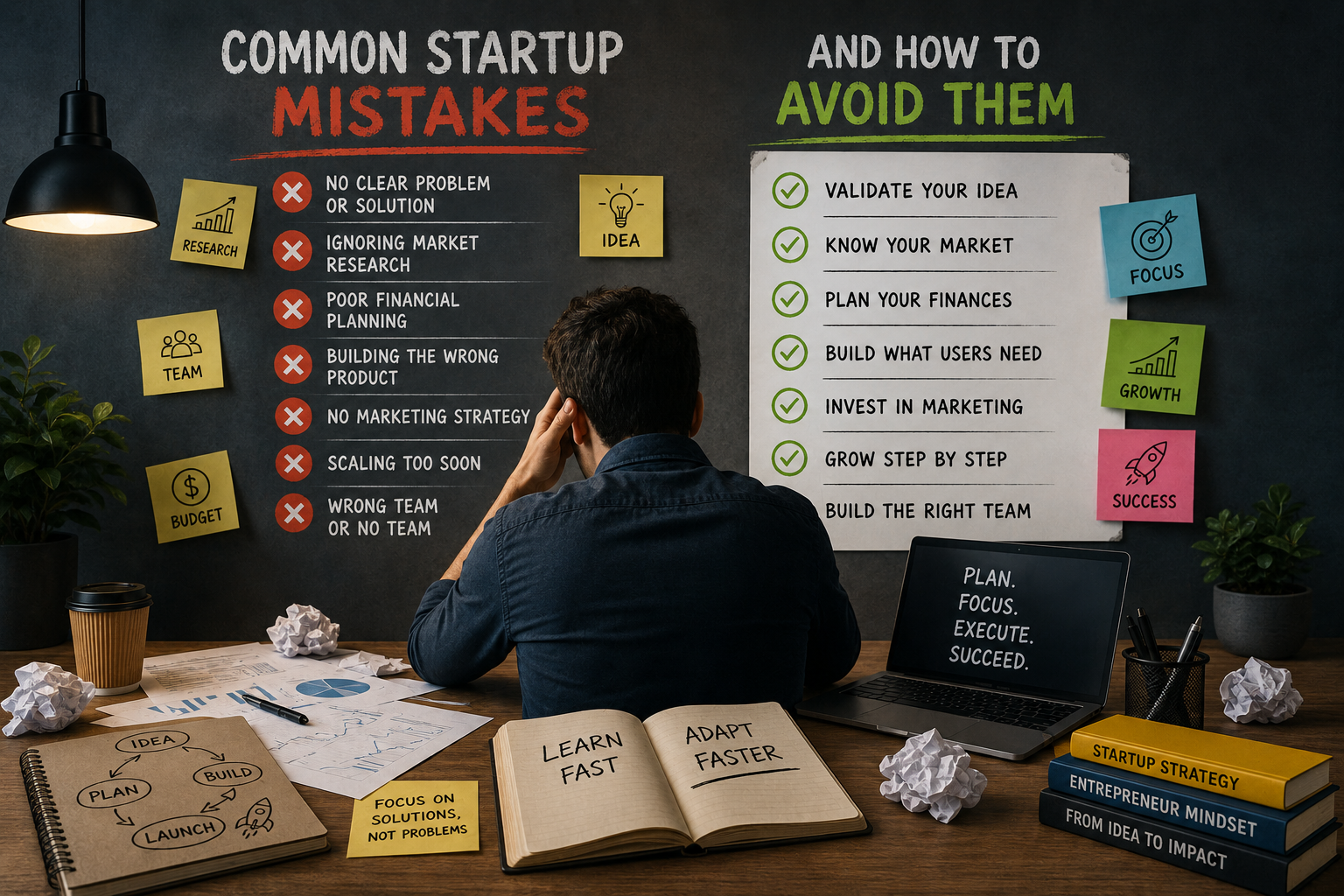
Learn the most common Startup Mistakes entrepreneurs make and discover practical strategies to avoid them for long-term business success.
Common Startup Mistakes and How to Avoid Them
Launching a new business is an exciting journey, but it also comes with significant challenges. Many startups fail not because they lack potential, but because they make avoidable errors during the early stages. Understanding common Startup Mistakes can help entrepreneurs make smarter decisions, reduce risks, and build a stronger foundation for long-term success.
Starting Without Market Research
One of the biggest Startup Mistakes is launching a product or service without understanding customer demand. Entrepreneurs sometimes assume people will automatically buy their offerings without validating the idea.
Before launching, research your target audience, analyze competitors, and identify real customer problems. A business built around genuine market demand has a much higher chance of success.
Poor Business Planning
Many startups begin without a clear business plan. Operating without defined goals, budgets, and growth strategies often leads to confusion and wasted resources.
Create a business plan that includes your target market, pricing model, marketing strategy, financial projections, and operational objectives. A solid plan helps guide decisions and keeps your business focused.
Ignoring Cash Flow
Running out of money is one of the most common reasons startups fail. Even profitable businesses can struggle if they do not manage cash flow properly.
Monitor income and expenses carefully, prepare for unexpected costs, and maintain an emergency reserve whenever possible. Financial discipline is essential for business stability.
Trying to Do Everything Alone
Many entrepreneurs believe they must handle every responsibility themselves. While dedication is important, attempting to manage every task often leads to burnout and slower business growth.
Delegate responsibilities, outsource specialized work when needed, and build a reliable team that supports your business goals.
Weak Marketing Strategy
Even excellent products cannot succeed if customers never discover them. One of the most costly Startup Mistakes is underestimating the importance of marketing.
Invest in search engine optimization (SEO), social media marketing, content creation, email campaigns, and networking to build brand awareness and attract potential customers.
Hiring Too Quickly
Expanding your team before the business is financially ready can create unnecessary expenses. Hiring employees without clearly defined roles may also reduce productivity.
Recruit gradually and focus on individuals whose skills directly contribute to business growth.
Ignoring Customer Feedback
Customers provide valuable insights that help improve products and services. Businesses that ignore reviews and feedback risk losing customer trust and falling behind competitors.
Listen to customer suggestions, resolve complaints professionally, and use feedback to improve the overall customer experience.
Setting Unrealistic Expectations
Many entrepreneurs expect immediate success. In reality, building a profitable business requires patience, persistence, and continuous improvement.
Set realistic milestones, celebrate progress, and remain committed to long-term goals instead of focusing only on quick results.
Neglecting Legal and Financial Compliance
Some startups overlook business registration, licensing, taxes, contracts, or accounting procedures. These oversights can lead to legal issues and financial penalties later.
Work with qualified legal and financial professionals to ensure your business complies with local regulations from the beginning.
Failing to Adapt
Markets change constantly due to new technologies, customer preferences, and economic conditions. Businesses that resist change often lose their competitive advantage.
Successful entrepreneurs monitor industry trends, evaluate market changes, and adjust their strategies when necessary.
Forgetting to Build Relationships
Strong relationships with customers, employees, suppliers, investors, and business partners create opportunities for long-term growth.
Networking, maintaining professional communication, and delivering consistent value help establish trust and strengthen your business reputation.
Conclusion
Avoiding common Startup Mistakes significantly improves the chances of building a successful business. Careful planning, financial discipline, customer-focused decision-making, effective marketing, and adaptability provide a strong foundation for sustainable growth. Every entrepreneur will face challenges, but learning from common mistakes allows businesses to develop with greater confidence and resilience.
FAQs
1. What are the most common Startup Mistakes?
The most common Startup Mistakes include poor market research, weak financial management, ineffective marketing, unrealistic expectations, and ignoring customer feedback.
2. Why do many startups fail?
Many startups fail because of cash flow problems, lack of planning, poor market understanding, and an inability to adapt to changing business conditions.
3. How can entrepreneurs avoid Startup Mistakes?
Conduct market research, develop a detailed business plan, manage finances carefully, seek customer feedback, and continuously improve your products or services.
4. Is marketing important for a new startup?
Yes. Effective marketing helps attract customers, build brand awareness, and generate consistent business opportunities.
5. Can Startup Mistakes be corrected?
Yes. Many mistakes can be addressed through careful analysis, strategic planning, customer feedback, and a willingness to adapt and improve over time.
